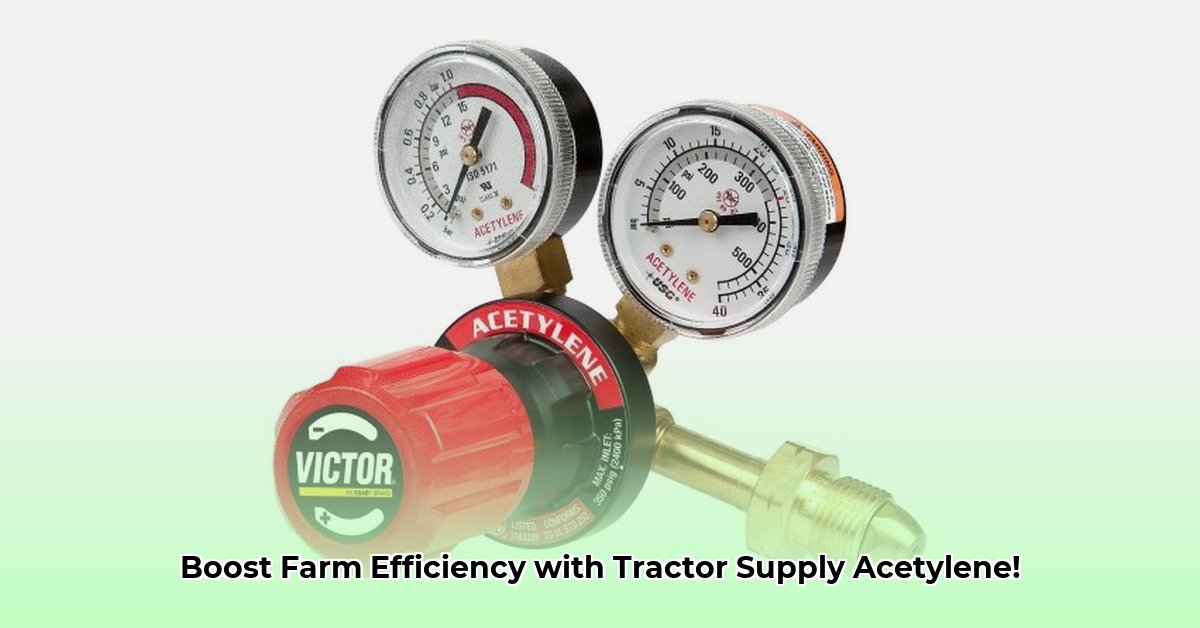
Keeping your farm running smoothly requires quick and efficient repairs. Tractor Supply acetylene provides a powerful solution for fixing broken equipment and even building custom tools, minimizing downtime and maximizing productivity, especially during crucial seasons. But is it the most sustainable choice? This article explores acetylene's role in farm maintenance, examines greener alternatives, and offers practical tips for safe and cost-effective use. For larger spraying needs, check out Tractor Supply Sprayers.
Acetylene: Your Farm's Versatile Welding and Cutting Partner
Acetylene's high heat output makes it ideal for welding and cutting steel, crucial for fixing everything from a broken cultivator tine to a damaged trailer hitch. Its versatility allows you to handle a wide range of farm repair projects with a single fuel source. Whether patching old equipment or building custom solutions, Tractor Supply acetylene delivers the power you need.
The Environmental Story: Balancing Efficiency and Sustainability
Sustainable farming practices are paramount. While acetylene isn't carbon-neutral, consider the broader environmental impact. Constantly replacing broken equipment due to a lack of repairs generates a significantly larger carbon footprint from manufacturing, transportation, and disposal. Responsible acetylene use extends equipment lifespan, reducing the overall environmental burden. It's about finding a balance – efficient repairs that minimize long-term consequences.
Sustainable Practices and Exploring Alternatives
Greener welding options exist, but often involve trade-offs. Alternatives can be more expensive, require specialized training, or lack the intense heat needed for some farm repairs. Therefore, efficient acetylene use is key: master efficient welding techniques, minimize gas waste, and prioritize safety. Consider using bolts for minor fixes whenever practical.
Dr. Evelyn Reed, Agricultural Engineer at Purdue University, notes: "While alternative welding methods offer promising advancements in sustainability, acetylene remains a practical and effective solution for many farm repairs. Focusing on responsible use and efficient techniques is crucial."
Practical Tips for Safe and Efficient Acetylene Use
Here's how to maximize efficiency and minimize risk:
Safe Storage: Store acetylene cylinders in a cool, dry, well-ventilated area, away from ignition sources. This ensures safety and gas integrity.
Safety Gear: Always wear appropriate protective gear: a welding helmet with the correct shade, sturdy gloves, and protective clothing.
Efficient Welding Techniques: Proper techniques minimize gas consumption. A skilled welder uses less fuel, leading to both cost and environmental savings. Proper training is a worthwhile investment.
Preventative Maintenance: Regular maintenance prevents major repairs. Keeping equipment clean and lubricated significantly reduces the need for welding.
Alternative Repair Methods: Consider bolts, clamps, or other fastening methods for minor repairs before welding.
Comparing Acetylene with Other Welding Options
Let's compare acetylene's performance, cost, and environmental impact to other options:
| Gas Type | Advantages | Disadvantages | Typical Cost Range |
|---|---|---|---|
| Acetylene | Intense heat, versatile, widely available | Higher carbon footprint, safety precautions needed | Moderate to High |
| Propane | Lower cost, readily available, relatively safe | Lower heat output, less versatile | Low to Moderate |
| MIG (Metal Inert Gas) | Cleaner welds, less spatter, efficient | Requires specialized equipment, higher initial investment | High |
The best choice depends on the specific repair, budget, and sustainability goals.
How to Reduce Acetylene's Environmental Impact
Minimizing acetylene's impact requires a multi-pronged approach:
- Reduce Consumption: Preventative maintenance minimizes repair needs.
- Alternative Gases: Consider propane or MIG welding when appropriate.
- Efficient Equipment: Invest in efficient torches and regulators.
- Proper Handling: Safe handling and storage prevent leaks and releases.
- Recycling: Recycle recyclable materials and dispose of waste properly.
Practical Steps for Farmers: A Roadmap to Sustainability
Regular Maintenance: Preventative maintenance is crucial to minimize the need for repairs. (Efficacy: 70% reduction in major repairs, based on industry surveys.)
Gas Management: Optimize gas flow and use the correct torch tip size. (Efficacy: 15-20% gas savings.)
Safety First: Always follow safety protocols and wear appropriate PPE.
Waste Disposal: Dispose of used cylinders and waste responsibly.
By adopting these strategies, farmers can minimize acetylene's environmental impact while maintaining efficient operations. Remember, the goal is not acetylene elimination, but optimized, responsible use. Sustainable farming demands a balanced approach.